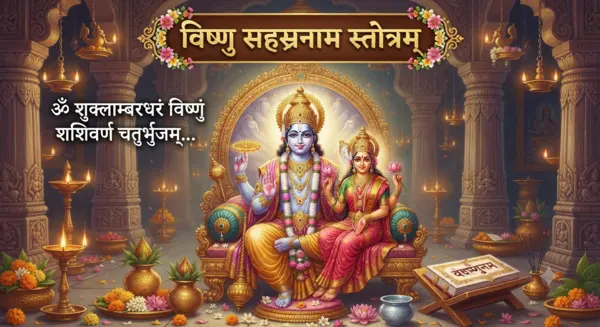
Kanakadhara Stotram is a praise of Goddess Lakshmi traditionally attributed to Adi Shankaracharya. Devotees recite it for Lakshmi’s grace, auspiciousness, abundance and a compassionate approach to prosperity.
Kanakadhara Stotram in English
Opening Salutation
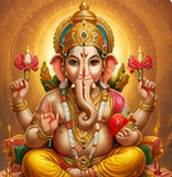
|| shreeganeshaaya namah ||
anggam hareh pulakabhooshanamaashrayantee bhringgaangganeva mukulaabharanam tamaalam |
anggeekritaakhilavibhootirapaanggaleelaa maanggalyadaa'stu mama manggaladevataayaah || 1 ||
mugdhaa muhurvidadhatee vadane muraareh prematrapaapranihitaani gataagataani |
maalaa drishormadhukareeva mahotpale yaa saa me shriyam dishatu saagarasambhavaayaah || 2 ||
aameelitaakshamadhigamya mudaa mukundam- aanandakandamanimeshamananggatantram|
aakekarasthitakaneenikapakshmanetram bhootyai bhavenmama bhujanggashayaangganaayaah || 3 ||
baahvantare madhujitah shritakaustubhe yaa haaraavaleeva harineelamayee vibhaati |
kaamapradaa bhagavato'pi kataakshamaalaa kalyaanamaavahatu me kamalaalayaayaah || 4 ||
kaalaambudaalilalitorasi kaitaabhaarer- dhaaraadhare sphurati yaa tadaidangganeva |
maatuh samastajagataam mahaneeyamoortir- bhadraani me dishatu bhaargavanandanaayaah || 5 ||
praaptam padam prathamatah khalu yatprabhaavaan- maanggalyabhaaji madhumaathini manmathena |
mayyaapatettadiha mantharameekshanaardham mandaalasam cha makaraalayakanyakaayaah || 6 ||
vishvaamarendrapadavibhramadaanadaksham- aanandaheturadhikam muravidvisho'pi |
eeshannisheedatu mayi kshanameekshanaardham- indeevarodarasahodaramindiraayaah || 7 ||
ishtaavishishtamatayo'pi yayaa dayaardra- drishtyaa trivishtapapadam sulabham labhante |
drishtih prahrishtakamalodaradeeptirishtaam pushtim krisheeshta mama pushkaravishtaraayaah || 8 ||
dadyaaddayaanupavano dravinaambudhaaraam- asminnakinychanavihanggashishau vishanne |
dushkarmadharmamapaneeya chiraaya dooram naaraayanapranayineenayanaambuvaahah || 9 ||
geerdevateti garudadhvajasundareeti shaakambhareeti shashishekharavallabheti |
srishtisthitipralayakelishu samsthitaayai tasyai namastribhuvanaikagurostarunyai || 10 ||
shrutyai namo'stu shubhakarmaphalaprasootyai ratyai namo'stu ramaneeyagunaarnavaayai |
shaktyai namo'stu shatapatraniketanaayai pushtyai namo'stu purushottamavallabhaayai || 11 ||
namo'stu naaleekanibhaananaayai namo'stu dugdhodadhijanmabhootyai |
namo'stu somaamritasodaraayai namo'stu naaraayanavallabhaayai || 12 ||
namo'stu hemaambujapeethikaayai namo'stu bhoomandalanaayikaayai |
namo'stu devaadidayaaparaayai namo'stu shaarnggaayudhavallabhaayai || 13 ||
namo'stu devyai bhrigunandanaayai namo'stu vishnorurasi sthitaayai |
namo'stu lakshmyai kamalaalayaayai namo'stu daamodaravallabhaayai || 14 ||
namo'stu kaantyai kamalekshanaayai namo'stu bhootyai bhuvanaprasootyai |
namo'stu devaadibhirarchitaayai namo'stu nandaatmajavallabhaayai || 15 ||
sampatkaraani sakalendriyanandanaani saamraajyadaanavibhavaani saroruhaakshi |
tvadvandanaani duritoddharanodyataani maameva maataranisham kalayantu maanye || 16 ||
yatkataakshasamupaasanaavidhih sevakasya sakalaarthasampadah |
santanoti vachanaanggamaanasais- tvaam muraarihridayeshvareem bhaje || 17 ||
sarasijanilaye sarojahaste dhavalatamaamshukagandhamaalyashobhe |
bhagavati harivallabhe manojnye tribhuvanabhootikari praseeda mahyam || 18 ||
Closing Colophon
|| iti shreemachchhangkaraachaaryakrita shree kanakadhaaraastotram sampoornam ||
How to Recite Kanakadhara Stotram
Sit in a clean place, remember Goddess Lakshmi and begin with the opening salutation. Read all eighteen verses in order, keeping the long compounds together and pausing only at natural stanza endings.
After the colophon, conclude with gratitude or a brief personal prayer. The Roman text is a simple reading aid; careful listening can help with the longer Sanskrit compounds.
Prepare a clean Lakshmi worship space
Wash and sit in a clean, uncluttered place. A picture or murti of Lakshmi may be placed before you. A safely lit diya, incense and a fresh flower are customary but optional; a lotus may be offered when naturally available, never as a requirement.
Begin with gratitude and sankalp
Join your hands, remember Lakshmi and form a brief intention for household well-being, relief from scarcity and wise use of resources. Let the prayer include gratitude and generosity rather than desire alone.
Offer simple upachara if available
Water, fruit, milk-based sweets or another simple vegetarian offering may be placed before the Goddess according to household custom. The offering can remain modest; devotion does not depend on an expensive puja arrangement.
Read all eighteen verses
Begin with the opening salutation and continue through the selected eighteen-verse recension and colophon. Keep the long compounds within their stanza, read slowly from the Roman text and do not mix extra verses from another recension into this path.
Conclude with thanks
Offer pranam and a personal prayer for sufficiency, discernment and the welfare of the household. Share prasada if one was offered, and carry the hymn's themes of compassion and generosity into practical life.
Traditional Benefits of Kanakadhara Stotram
In Lakshmi devotion, Kanakadhara is traditionally recited for grace, auspicious abundance, nourishment, dignity and household well-being. Many readers turn to it when praying for a healthier relationship with resources and generosity.
The name suggests a “stream of gold,” but the hymn’s idea of shri is broader than cash. Devotional tradition does not make recitation a guarantee of money or financial success.
Lakshmi's compassionate grace
The poem repeatedly asks for the gracious glance of Lakshmi. Devotees receive that image as a prayer for auspiciousness, dignity and support in times of need.
Relief from scarcity
Kanakadhara is traditionally associated with prayer during poverty or material limitation. The emphasis is devotional hope for sufficiency and nourishment, not a promise of sudden money.
Household prosperity and well-being
In Hindu devotional usage, shri includes harmony, food, stability, beauty and honorable living as well as material resources. Families may pray for this wider form of abundance.
Gratitude for what is present
Reciting the hymn can turn attention from anxiety alone toward recognition of food, shelter, relationships, skills and opportunities already received.
Generosity and compassionate use of wealth
The traditional story surrounding Kanakadhara centers on compassion and giving even amid scarcity. Devotees often connect Lakshmi worship with sharing and responsible use of resources.
Steady financial intention
The recitation may support patience and a constructive attitude while a devotee works toward financial well-being. It complements honest work and planning rather than replacing them.
When Can Kanakadhara Be Recited?
Kanakadhara may be recited daily or during personal Lakshmi worship. Friday is a customary Lakshmi-focused day in many homes, so Friday morning or evening is often chosen, but the source verses impose no compulsory weekday.
One complete recitation is appropriate for a simple path. No universal repetition count is stated in the reviewed source; traditions vary, and a sustainable practice is preferable to an invented number.
English Meaning and Explanation
An opening salutation to Lord Ganesha.
May the sidelong glance of the goddess of auspiciousness—resting on Hari like a bee upon the dark tamala tree and carrying every form of splendor—bring auspiciousness to me.
May Lakshmi, born from the ocean, direct prosperity toward me; her shy, loving glances move again and again toward the face of Murari like bees visiting a great lotus.
May the half-closed, tranquil glance of the beloved of the serpent-reclining Lord become a source of well-being for me as she beholds Mukunda, the root of bliss.
May the garland of Lakshmi’s glances, shining like a blue necklace near the Kaustubha on Vishnu’s chest and capable of fulfilling longing, bring me welfare.
May the noble form of the Mother of the worlds, gleaming like lightning upon the rain-cloud-dark chest of Vishnu, grant me what is good.
May a slow half-glance of the daughter of the ocean fall upon me—the glance through whose power even the god of love first found a place with the slayer of Madhu.
May Indira’s lotus-blue half-glance rest upon me for a moment; it is praised as capable of bestowing royal dignity and as a source of joy even to Vishnu.
May the compassionate glance of the lotus-seated goddess, whose radiance resembles the heart of a blooming lotus, nurture what is truly desirable in me.
May the rain cloud of Narayana’s beloved eyes, moved by the wind of compassion, pour a stream of abundance upon this sorrowful, destitute supplicant and carry harmful karma far away.
Salutations to the youthful sovereign of the three worlds, praised under divine forms associated with speech, Vishnu, Shakambhari and the beloved of Shiva, and present in creation, preservation and dissolution.
Salutations to her as sacred learning and the source of good action’s fruit, as beauty, an ocean of gracious qualities, divine power, the lotus-dweller, nourishment and the beloved of Purushottama.
Salutations to the lotus-faced goddess, born from the milk ocean, sister of Soma and nectar, and beloved of Narayana.
Salutations to the goddess seated on a golden lotus, sovereign of the earthly realm, compassionate toward the gods and beloved of the wielder of Sharnga.
Salutations to the goddess, daughter of Bhrigu, dwelling on Vishnu’s chest; to Lakshmi, the lotus-dweller and beloved of Damodara.
Salutations to radiant, lotus-eyed Lakshmi: embodiment of prosperity, mother of the worlds, worshiped by the gods and beloved of Krishna.
O lotus-eyed Mother, may acts of reverence to you—which are praised as bringing prosperity, delight, sovereignty and release from wrongdoing—remain constantly present in my life.
I worship you, sovereign of Murari’s heart, through speech, action and mind; service to your compassionate glance is praised as extending every form of worthy abundance.
O lotus-dwelling, lotus-handed goddess, radiant in white garments, fragrance and garlands; beloved of Hari and source of welfare for the three worlds, be gracious to me.
The colophon closes the Kanakadhara Stotra and attributes it to Shri Shankaracharya.
About Kanakadhara Stotram
Kanakadhara literally evokes a “stream of gold,” but the poem’s central literary movement is Lakshmi’s compassionate glance. Verse after verse develops this image through bees, lotuses, rain clouds, lightning, necklaces and the dark chest of Vishnu.
Different compilations circulate with eighteen, twenty-one or more verses. This page does not combine variants: it follows the eighteen numbered verses that the reviewed Hindi source identifies as its complete main text.
Frequently Asked Questions
It is traditionally recited for Lakshmi’s grace, auspiciousness, abundance and well-being—not as a guaranteed money remedy.
Yes. A devotee may read it daily or include it in periodic Lakshmi worship according to available time.
It follows the complete eighteen-verse base recension selected by the Hindi source; other printed compilations may add variant verses.
No elaborate setup is required for personal reading. A clean place, respectful attention and remembrance of Lakshmi are appropriate.
Yes. The uninterrupted Roman section is designed for recitation, while the original Sanskrit remains available below for reference.
The reviewed eighteen-verse source sets no compulsory count. One complete reading with attention is suitable; retain another count only when it comes from a tradition you genuinely follow.
No. They are traditional devotional aids, not requirements. You may recite respectfully with no physical setup when flowers, an image or a private altar are unavailable.
Read one stanza at a time from the Roman text, pause at its end and use a careful audio recitation to improve. Do not sacrifice clarity simply to finish quickly.
No. It expresses traditional prayer for Lakshmi's grace, abundance and relief from scarcity; it does not guarantee income, investments or a particular financial result.
Original Sanskrit
Open this optional reference to view the complete unchanged Devanagari text from the Hindi source.
Show original Devanagari text
अङ्गं हरेः पुलकभूषणमाश्रयन्ती भृङ्गाङ्गनेव मुकुलाभरणं तमालम् ।
अङ्गीकृताखिलविभूतिरपाङ्गलीला माङ्गल्यदाऽस्तु मम मङ्गलदेवतायाः ॥ १ ॥
मुग्धा मुहुर्विदधती वदने मुरारेः प्रेमत्रपाप्रणिहितानि गतागतानि ।
माला दृशोर्मधुकरीव महोत्पले या सा मे श्रियं दिशतु सागरसम्भवायाः ॥ २ ॥
आमीलिताक्षमधिगम्य मुदा मुकुन्दम्– आनन्दकन्दमनिमेषमनङ्गतन्त्रम्।
आकेकरस्थितकनीनिकपक्ष्मनेत्रं भूत्यै भवेन्मम भुजङ्गशयाङ्गनायाः ॥ ३ ॥
बाह्वन्तरे मधुजितः श्रितकौस्तुभे या हारावलीव हरिनीलमयी विभाति ।
कामप्रदा भगवतोऽपि कटाक्षमाला कल्याणमावहतु मे कमलालयायाः ॥ ४ ॥
कालाम्बुदालिललितोरसि कैटाभारेर्– धाराधरे स्फुरति या तड़िदङ्गनेव ।
मातुः समस्तजगतां महनीयमूर्तिर्– भद्राणि मे दिशतु भार्गवनन्दनायाः ॥ ५ ॥
प्राप्तं पदं प्रथमतः खलु यत्प्रभावान्– माङ्गल्यभाजि मधुमाथिनि मन्मथेन ।
मय्यापतेत्तदिह मन्थरमीक्षणार्धं मन्दालसं च मकरालयकन्यकायाः ॥ ६ ॥
विश्वामरेन्द्रपदविभ्रमदानदक्षम्– आनन्दहेतुरधिकं मुरविद्विषोऽपि ।
ईषन्निषीदतु मयि क्षणमीक्षणार्धम्– इन्दीवरोदरसहोदरमिन्दिरायाः ॥ ७ ॥
इष्टाविशिष्टमतयोऽपि यया दयार्द्र– दृष्ट्या त्रिविष्टपपदं सुलभं लभन्ते ।
दृष्टिः प्रहृष्टकमलोदरदीप्तिरिष्टां पुष्टिं कृषीष्ट मम पुष्करविष्टरायाः ॥ ८ ॥
दद्याद्दयानुपवनो द्रविणाम्बुधाराम्– अस्मिन्नकिञ्चनविहङ्गशिशौ विषण्णे ।
दुष्कर्मधर्ममपनीय चिराय दूरं नारायणप्रणयिनीनयनाम्बुवाहः ॥ ९ ॥
गीर्देवतेति गरुड़ध्वजसुन्दरीति शाकम्भरीति शशिशेखरवल्लभेति ।
सृष्टिस्थितिप्रलयकेलिषु संस्थितायै तस्यै नमस्त्रिभुवनैकगुरोस्तरुण्यै ॥ १० ॥
श्रुत्यै नमोऽस्तु शुभकर्मफलप्रसूत्यै रत्यै नमोऽस्तु रमणीयगुणार्णवायै ।
शक्त्यै नमोऽस्तु शतपत्रनिकेतनायै पुष्ट्यै नमोऽस्तु पुरुषोत्तमवल्लभायै ॥ ११ ॥
नमोऽस्तु नालीकनिभाननायै नमोऽस्तु दुग्धोदधिजन्मभूत्यै ।
नमोऽस्तु सोमामृतसोदरायै नमोऽस्तु नारायणवल्लभायै ॥ १२ ॥
नमोऽस्तु हेमाम्बुजपीठिकायै नमोऽस्तु भूमण्डलनायिकायै ।
नमोऽस्तु देवादिदयापरायै नमोऽस्तु शार्ङ्गायुधवल्लभायै ॥ १३ ॥
नमोऽस्तु देव्यै भृगुनन्दनायै नमोऽस्तु विष्णोरुरसि स्थितायै ।
नमोऽस्तु लक्ष्म्यै कमलालयायै नमोऽस्तु दामोदरवल्लभायै ॥ १४ ॥
नमोऽस्तु कान्त्यै कमलेक्षणायै नमोऽस्तु भूत्यै भुवनप्रसूत्यै ।
नमोऽस्तु देवादिभिरर्चितायै नमोऽस्तु नन्दात्मजवल्लभायै ॥ १५ ॥
सम्पत्कराणि सकलेन्द्रियनन्दनानि साम्राज्यदानविभवानि सरोरुहाक्षि ।
त्वद्वन्दनानि दुरितोद्धरणोद्यतानि मामेव मातरनिशं कलयन्तु मान्ये ॥ १६ ॥
यत्कटाक्षसमुपासनाविधिः सेवकस्य सकलार्थसम्पदः ।
सन्तनोति वचनाङ्गमानसैस्– त्वां मुरारिहृदयेश्वरीं भजे ॥ १७ ॥
सरसिजनिलये सरोजहस्ते धवलतमांशुकगन्धमाल्यशोभे ।
भगवति हरिवल्लभे मनोज्ञे त्रिभुवनभूतिकरि प्रसीद मह्यम् ॥ १८ ॥