
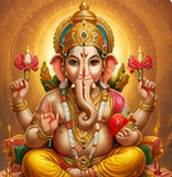
Ganesh Puja is the worship of Lord Ganesha as Mangalamurti and Vighnaharta, traditionally remembered before auspicious work and prayed to for wisdom, discernment and help in overcoming obstacles.
This complete home guide follows the reviewed Hindi source from purification and sankalp through offerings, aarti, kshama prarthana and prasad. It may be used for regular morning worship, Wednesday devotion or a Ganesha-focused Chaturthi observance.
Ganesh Puja Samagri
Core worship materials
- A clean Ganesh murti or image
- An asana and puja thali
- A water vessel with clean water and Gangajal
- Milk, curd, ghee, honey and sugar or mishri for panchamrit
- Roli or kumkum
- Chandan or red chandan
- Unbroken rice (akshat)
- Fresh red or white flowers
- Dhoop or incense
- A ghee diya
- Camphor
- Sweets and fruit for naivedya
- A coconut
- Betel leaves and areca nut
- Dakshina
Ganesh-specific traditional offerings
- Fresh, washed durva grass
- Modak or laddoo
- Kusha and sesame where used in the family tradition
- Jaggery, or jaggery with roasted gram, where customary
Before You Begin
- Bathe or wash, wear clean clothes and clean the home altar or puja area before arranging the materials.
- Place the clean Ganesh murti or image on its seat. A permanent murti may be cleaned according to the material from which it is made.
- The source notes east or northeast as customary placement and east or north as customary facing directions; use the space safely if this arrangement is not practical.
- Prepare panchamrit only if the murti is suitable for bathing. Keep a clean cloth ready to dry it, and arrange every offering before beginning.
- Sit calmly and decide the honest devotional purpose of the puja before making the sankalp.
Complete Ganesh Puja Vidhi – Step by Step
Follow the complete sequence below in order. Items described as customary may be omitted when they do not belong to the household tradition or are unsuitable for the murti.
Achaman and purification
Sit at the prepared altar with the water vessel nearby. If achaman is part of your practice, take the prescribed small sips of clean water while reciting the first names, then complete the remaining remembrance for bodily and mental purification.
Achaman mantraOm keshavaaya namah| Om naaraayanaaya namah| Om maadhavaaya namah|Meaning: Salutations to Keshava, Narayana and Madhava.
Original Sanskrit
ॐ केशवाय नमः। ॐ नारायणाय नमः। ॐ माधवाय नमः।Purification remembranceOm govindaaya namah| Om vishnave namah| Om madhusoodanaaya namah| Om trivikramaaya namah| Om vaamanaaya namah| Om shreedharaaya namah| Om hrisheekeshaaya namah| Om padmanaabhaaya namah| Om daamodaraaya namah|Meaning: A sequence of salutations seeking purity of body, speech and mind through remembrance of the divine names.
Original Sanskrit
ॐ गोविन्दाय नमः। ॐ विष्णवे नमः। ॐ मधुसूदनाय नमः। ॐ त्रिविक्रमाय नमः। ॐ वामनाय नमः। ॐ श्रीधराय नमः। ॐ हृषीकेशाय नमः। ॐ पद्मनाभाय नमः। ॐ दामोदराय नमः।Meditate on Lord Ganesha
Look toward the murti or hold Ganesha clearly in the mind. Recite the dhyana verse slowly and let the attention settle before beginning the formal offerings.
Ganesh dhyanagajaananam bhootaganaadisevitam kapitthajamboophalachaarubhakshanam| umaasutam shokavinaashakaarakam namaami vighneshvarapaadapangkajam||Meaning: I bow at the lotus feet of elephant-faced Vighneshvara, son of Uma, served by the ganas and remembered as the remover of sorrow.
Original Sanskrit
गजाननं भूतगणादिसेवितं कपित्थजम्बूफलचारुभक्षणम्। उमासुतं शोकविनाशकारकं नमामि विघ्नेश्वरपादपङ्कजम्॥Make the sankalp
Hold a little water or akshat in the right hand according to family practice. State the place, date, your name and gotra if known, and the purpose of the puja. Replace each “amuka” placeholder with the relevant detail; a shorter sincere statement may be used when the full calendrical formula is not known.
Source sankalp formatOm vishnuh vishnuh vishnuh| Om tatsadbrahmano dviteeyaparaardhe shvetavaaraahakalpe vaivasvatamanvantare ashtaavimshatitame kaliyuge kaliprathamacharane jamboodveepe bhaaratavarshe amukapradeshe amukagraame amukasamvatsare amukaayane amukartau amukamaase amukapakshe amukatithau amukavaasare amukanakshatre amukagotrotpannah aham amukasharmaa, shreeganeshapreetyartham, amukakaamanaasiddhyartham cha ganeshapoojaam karishye|Meaning: After identifying the time, place and worshipper, the devotee resolves to perform Ganesh Puja for the pleasure of Lord Ganesha and the stated devotional purpose.
Original Sanskrit
ॐ विष्णुः विष्णुः विष्णुः। ॐ तत्सद्ब्रह्मणो द्वितीयपरार्धे श्वेतवाराहकल्पे वैवस्वतमन्वन्तरे अष्टाविंशतितमे कलियुगे कलिप्रथमचरणे जम्बूद्वीपे भारतवर्षे अमुकप्रदेशे अमुकग्रामे अमुकसंवत्सरे अमुकायने अमुकर्तौ अमुकमासे अमुकपक्षे अमुकतिथौ अमुकवासरे अमुकनक्षत्रे अमुकगोत्रोत्पन्नः अहं अमुकशर्मा, श्रीगणेशप्रीत्यर्थं, अमुककामनासिद्ध्यर्थं च गणेशपूजां करिष्ये।Avahan and the first offerings
Invite Lord Ganesha into the worship with folded hands. Offer an asana, then padya, arghya and achamaniya water in sequence. Use small clean vessels and symbolic quantities suitable for a home altar.
Avahan and water offeringsOm ganapataye namah aavaahanam samarpayaami| Om ganapataye namah aasanam samarpayaami| Om ganapataye namah paadyam samarpayaami| Om ganapataye namah arghyam samarpayaami| Om ganapataye namah aachamaneeyam samarpayaami|Meaning: Salutations to Ganapati; I offer invocation, a seat, water for the feet, arghya and water for sipping.
Original Sanskrit
ॐ गणपतये नमः आवाहनं समर्पयामि। ॐ गणपतये नमः आसनं समर्पयामि। ॐ गणपतये नमः पाद्यं समर्पयामि। ॐ गणपतये नमः अर्घ्यं समर्पयामि। ॐ गणपतये नमः आचमनीयं समर्पयामि।Snan or abhishek
If the murti is suitable for bathing, offer clean water and then panchamrit made from the listed five ingredients. Rinse again with clean water and dry the murti carefully. For a picture or a murti that should not become wet, make the offering symbolically instead of pouring liquid over it.
Snan and panchamrit offeringOm ganapataye namah snaanam samarpayaami| Om ganapataye namah panychaamritam samarpayaami|Meaning: Salutations to Ganapati; I offer the ritual bath and panchamrit.
Original Sanskrit
ॐ गणपतये नमः स्नानं समर्पयामि। ॐ गणपतये नमः पञ्चामृतं समर्पयामि।Offer vastra, janeu and gandha where customary
Offer clean cloth and a sacred thread only when these are used for the murti in your tradition. Apply chandan, red chandan or roli as a respectful tilak.
Vastra, yajnopavita and gandhaOm ganapataye namah vastram samarpayaami| Om ganapataye namah yajnyopaveetam samarpayaami| Om ganapataye namah gandham samarpayaami|Meaning: Salutations to Ganapati; I offer cloth, the sacred thread and fragrance or sandal paste.
Original Sanskrit
ॐ गणपतये नमः वस्त्रं समर्पयामि। ॐ गणपतये नमः यज्ञोपवीतं समर्पयामि। ॐ गणपतये नमः गन्धं समर्पयामि।Offer durva, flowers and akshat
Offer fresh washed durva first, followed by flowers and unbroken rice. The source records twenty-one durva bunches as a common custom; it is a tradition-specific count rather than a requirement invented for this guide.
Durva, flower and akshat offeringsOm ganapataye namah doorvaangkuram samarpayaami| Om ganapataye namah pushpam samarpayaami| Om ganapataye namah akshataan samarpayaami|Meaning: Salutations to Ganapati; I offer shoots of durva, flowers and unbroken rice.
Original Sanskrit
ॐ गणपतये नमः दूर्वाङ्कुरं समर्पयामि। ॐ गणपतये नमः पुष्पं समर्पयामि। ॐ गणपतये नमः अक्षतान् समर्पयामि।Offer dhoop and deep
Offer incense and then show the safely lit ghee lamp before Ganesha. Keep flame and smoke away from fabric, children and enclosed spaces.
Dhoop and deep offeringOm ganapataye namah dhoopam samarpayaami| Om ganapataye namah deepam samarpayaami|Meaning: Salutations to Ganapati; I offer incense and light.
Original Sanskrit
ॐ गणपतये नमः धूपं समर्पयामि। ॐ गणपतये नमः दीपं समर्पयामि।Deepa prayershubham karoti kalyaanamaarogyam dhanasampadam| shatrubuddhivinaashaaya deepajyotirnamo'stute||Meaning: I bow to the lamp’s flame, traditionally praised as a bearer of auspiciousness, welfare and illuminating wisdom.
Original Sanskrit
शुभं करोति कल्याणमारोग्यं धनसम्पदम्। शत्रुबुद्धिविनाशाय दीपज्योतिर्नमोऽस्तुते॥Offer naivedya, tambul and dakshina
Place modak or laddoo, other sweets and fruit before Ganesha without tasting them first. Offer betel leaf with areca nut and dakshina where these belong to your practice. Leave the food offered until the aarti is complete, then treat it as prasad.
Naivedya, tambul and dakshinaOm ganapataye namah naivedyam samarpayaami| Om ganapataye namah taamboolam samarpayaami| Om ganapataye namah dakshinaam samarpayaami|Meaning: Salutations to Ganapati; I offer food, tambul and dakshina.
Original Sanskrit
ॐ गणपतये नमः नैवेद्यं समर्पयामि। ॐ गणपतये नमः ताम्बूलं समर्पयामि। ॐ गणपतये नमः दक्षिणां समर्पयामि।Aarti, pushpanjali, pradakshina and closing prayer
Perform the Ganesh aarti with a ghee lamp or camphor according to household custom. Offer pushpanjali, make one or three respectful pradakshinas where space permits, bow, and ask forgiveness for errors. Distribute the offered food as prasad after completion. A permanent home murti is not immersed or formally dismissed.
PushpanjaliOm ganapataye namah pushpaanyjalim samarpayaami|Meaning: Salutations to Ganapati; I offer this handful of flowers.
Original Sanskrit
ॐ गणपतये नमः पुष्पाञ्जलिं समर्पयामि।Kshama prarthanaaavaahanam na jaanaami na jaanaami tathaarchanam| poojaam chaiva na jaanaami kshamasva parameshvara|| mantraheenam kriyaaheenam bhaktiheenam maheshvara| yatpoojitam mayaa deva paripoornam tadastu me||Meaning: I may not know the invocation, worship or procedure perfectly; please forgive the shortcomings and accept this puja as complete through devotion.
Original Sanskrit
आवाहनं न जानामि न जानामि तथार्चनम्। पूजां चैव न जानामि क्षमस्व परमेश्वर॥ मन्त्रहीनं क्रियाहीनं भक्तिहीनं महेश्वर। यत्पूजितं मया देव परिपूर्णं तदस्तु मे॥
Simple Ganesh Puja at Home
This shorter home method uses only actions already supported by the source. It is respectful daily worship, not a claim that every formal upachara has been performed.
- Clean the puja place, wash, sit calmly and place the Ganesh image or murti before you.
- Remember Ganesha with the dhyana verse or simply say “Om Ganapataye Namah.” State your purpose in your own words.
- Offer chandan or roli, akshat, fresh durva and flowers.
- Show incense and a safely lit diya, then offer modak, laddoo, another sweet or fruit from the listed samagri.
- Perform a short Ganesh aarti or offer folded-hand prayer, recite the kshama prarthana, bow and distribute prasad.
When Can Ganesh Puja Be Performed?
The source supports regular morning worship after bathing, Wednesday as a customary Ganesha day, and Chaturthi observances such as Sankashti Chaturthi and Vinayaka Chaturthi. Ganesh Chaturthi is the major annual festival context.
Ganesh Puja is also traditionally performed before weddings, house entry, beginning education and other auspicious work. Exact festival muhurta changes by place and year, so use the relevant local panchang rather than a fixed time copied into this page.
Traditional Purpose and Benefits of Ganesh Puja
According to Hindu devotional tradition, Ganesh Puja is performed to begin with auspicious remembrance and seek Lord Ganesha’s guidance. These are devotional purposes, not guaranteed material outcomes.
Prayer for overcoming obstacles
Devotees remember Ganesha as Vighnaharta and pray for the clarity and support needed to address obstacles at the beginning of important work.
Wisdom and discernment
Students, families and professionals traditionally worship Ganesha while seeking buddhi, sound judgment and better attention.
Auspicious beginnings
The puja is commonly placed at the start of ceremonies and new undertakings so that action begins with humility and divine remembrance.
Devotional steadiness
The complete sequence develops patience and attentive offering rather than a hurried request for a result.
Family worship
A home puja gives family members a shared way to offer prayer, receive prasad and mark an important beginning together.
Important Ganesh Puja Notes
- Do not bathe a painted, clay, paper or otherwise water-sensitive murti; offer snan symbolically.
- If one customary item is unavailable, omit it rather than replacing it with an unrelated material. Keep the available offerings clean and suitable.
- Durva should be fresh and washed. Food should be offered before tasting and distributed as prasad afterward.
- A priest is not required for this source-supported home method. Temple agama procedures and major festival installations may follow additional rules.
- Use the Roman mantra text slowly. Pronunciation can improve through careful listening; an imperfect beginner does not need to rush or multiply repetitions.
Frequently Asked Questions
Yes. The complete home sequence on this page can be followed respectfully. A priest may be consulted for a major installation or a family-specific formal ceremony.
The reviewed source specifically identifies fresh durva and modak or laddoo, alongside the ordinary offerings listed above.
No. Use it only when the murti is suitable for bathing and the practice belongs to your household tradition. A symbolic snan is appropriate for a water-sensitive image.
Yes. Every source mantra appears first in simple Roman letters with the original Sanskrit available below it for reference.
The source gives no fixed duration. Time depends on whether you perform every upachara, chant additional prayers or use the simplified home method.
Keep it offered through the aarti, then share it respectfully as prasad.