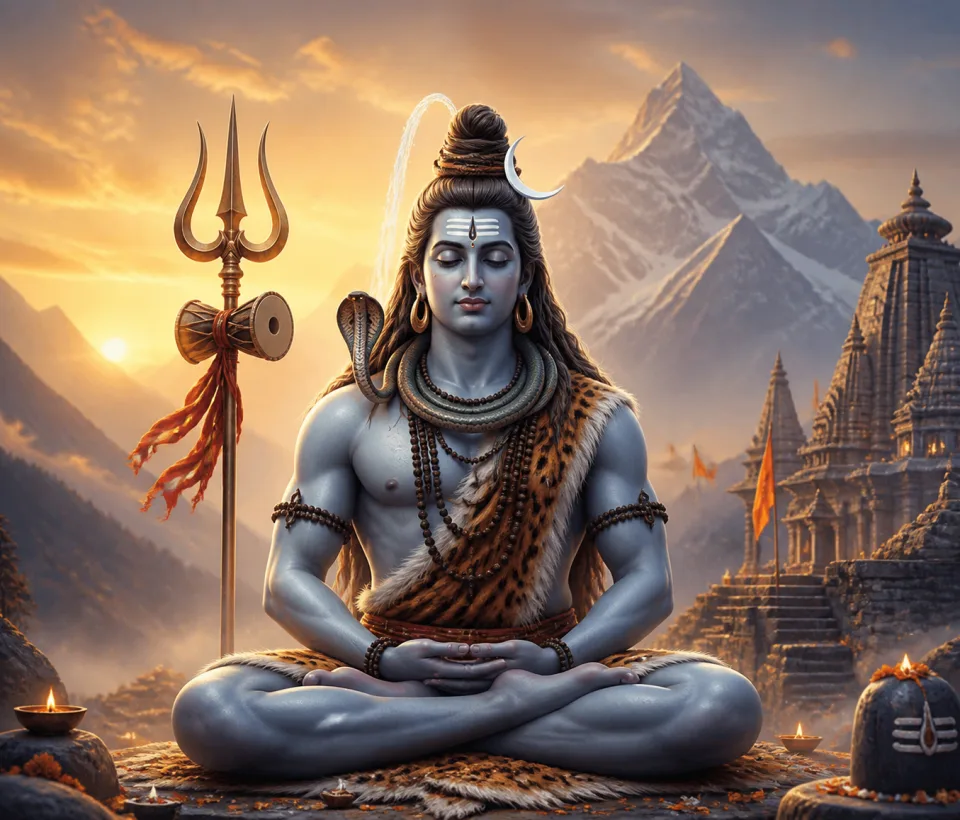
Ganga Chalisa follows the sacred river from divine origins and Shiva’s matted locks to Gangotri, Devprayag, Haridwar, Prayagraj, Kashi, and Gangasagar. Geography and prayer flow together through the recovered text.
The visible Hindi article retained only an introduction, but its verified database metadata preserves two opening units, twenty-three main stanzas, and a closing doha. The English page reads from those untouched internal fields.
Quick Facts
Ganga Chalisa Lyrics in English
Read the complete source-linked devotional sequence in simple Roman script.
Opening Dohas
Ganga mata charan raj, shish dharun kar jod chalisa kahun bhakti se, karo kripa ati hod
Patit pavani mokshada, surasarita sukhadham ganga man ki vandana, pure sakal akam
Ganga Chalisa
Jay ganga mata jay jay mata patitapavani trilok vikhyata
Brahma kamandalu men tum basati vishnu charan se dhara bahati
Shiv jata men jab tum ai bhagirath ne prithvi par lai
Sagar vansh ko taran hari shashti sahasr sutan uddhari
Gomukh se gangotri ai devaprayag men alakananda milai
Rishikesh haridvar biraje prayagaraj men triveni saje
Yamuna sarasvati sang mili triveni sangam pavan thali
Varanasi men ghat suhaye dashashvamedh manikarnika bhaye
Kashi karavat ganga tire mokshadayini prabhu ki lire
Sagar men ja mili antatah gangasagar tirth pavitratah
Char dham men gangaji basati sab tirthon men sarvashreshth kahati
Snan kare jo ganga jal men sab pap dhule ek pal men
Gangajal ghar men jo rakhate pitar tript sab sukh ko lakhate
Pitri tarpan ganga men kije pitaron ko sadgati dije
Makar sankranti ganga snana kumbh mela men mahima jana
Ganga dashahara vrat kije das papon ka nash karije
Ganga maiya ki jay bolo patit pavani men man dolo
Nirmal dhara shital pani ganga man ki mahima bakhani
Jo ganga jal pan karave antakal men moksh pave
Ganga tat par dhyan lagave so param pad nishchay pave
Dusht karm sab dur bhagave ganga nam jo bhakt dhyave
Nity chalisa jo koi gave ganga man ki kripa pave
Sakal manorath purn karave ganga mata sukhad banave
Closing Doha
Ganga chalisa padhe, bhakti bhav man lay patit pavani man ki kripa, moksh sahaj ho jay
Ganga Chalisa Meaning in English
Opening Dohas Meaning
The speaker places Ganga’s sacred dust upon the head, joins the hands, and begins the Chalisa with devotion and a request for grace.
Ganga is praised as purifier of the fallen, giver of liberation, celestial river, and abode of well-being who completes selfless prayer.
Chalisa Meaning
Victory to Mother Ganga, celebrated through the three worlds as the purifier of those who have fallen.
She dwells in Brahma’s water vessel and her current is said to arise from Vishnu’s feet.
Ganga enters Shiva’s matted locks before Bhagiratha brings her flow down to earth.
She liberates the line of King Sagara, including his sixty thousand sons.
From Gomukh she comes through Gangotri and joins Alaknanda at Devprayag.
She is present at Rishikesh and Haridwar, then adorns Prayagraj through the Triveni.
Ganga meets Yamuna and the unseen Sarasvati at the revered confluence.
Varanasi’s ghats are praised, especially Dashashwamedh and Manikarnika.
Along Kashi’s bank she is remembered as a river associated with liberation.
Her earthly journey ultimately reaches the sea at the sacred place of Gangasagar.
The hymn connects Ganga with the Char Dham and honours her among the foremost pilgrimage waters.
Bathing in Ganga is described devotionally as washing away wrongdoing in a moment.
Keeping Gangajal at home is linked with remembrance of ancestors and household well-being.
The devotee is encouraged to offer ancestral tarpan in Ganga and pray for a good onward state.
Her bathing festivals are remembered at Makar Sankranti and the Kumbh gathering.
Ganga Dussehra observance is associated in the hymn with removing ten kinds of wrongdoing.
The listener is invited to acclaim Ganga Maiya and let the mind rest in the purifier’s presence.
Her clear current and cool water become images through which the Mother’s greatness is sung.
Giving Gangajal at life’s end is traditionally joined here with the hope for liberation.
Meditation upon Ganga’s bank is presented as a path toward the highest spiritual state.
A devotee who remembers Ganga’s name seeks distance from harmful actions.
Daily singing of the Chalisa is associated with receiving Mother Ganga’s grace.
The sequence concludes by asking Ganga to fulfil worthy hopes and bring sustaining happiness.
Closing Doha Meaning
Whoever reads with devotion seeks the purifier’s grace and an easier path toward liberation.
Ganga Chalisa: A Sacred River Mapped through Prayer
The hymn is also a journey map. Its place names trace a devotional route from the Himalayan source to the ocean while joining landscape with stories of Bhagiratha, Sagara, and Shiva.
Purification language should be understood in its religious setting. Reverence for Ganga can also invite practical responsibility toward clean water, living rivers, and respectful pilgrimage.
Main Themes in the Ganga Chalisa
Descent and movement shape the prayer: divine grace passes through mountains, confluences, cities, families, and finally the sea.
Memory connects generations as personal devotion expands into care for ancestors, pilgrims, and the river itself.
How to Read the Ganga Chalisa
Follow the place names slowly and use the meanings as a north-to-sea itinerary through the recovered twenty-three-unit source.
If reading beside water, keep the observance environmentally respectful and avoid leaving offerings or packaging in the river.
Frequently Asked Questions
It remained in the Hindi post’s verified dohas, choupais, and closing_doha metadata fields.
That is the intact sequence preserved internally; no extra stanzas were added to force a conventional count.
It includes Gomukh, Gangotri, Devprayag, Rishikesh, Haridwar, Prayagraj, Varanasi, and Gangasagar.
Prayer can be joined with clean, low-waste pilgrimage and practical care for water and river ecosystems.